EJA – Environmental Justice Albania Platform
Data Transparency and Accountability Infrastructure for Environmental Justice in Albania
The EJA Platform (ejaplatform.al) was developed as a national transparency and accountability infrastructure for environmental justice in Albania, designed to support public access to structured legal and institutional information while enabling accountability workflows, monitoring logic, and citizen participation.
This was not a standard institutional website. The platform required a multi-module digital system capable of combining public transparency, structured databases, institutional mapping, case documentation, analytical reporting, and citizen reporting of suspected environmental violations within one coherent architecture.
Spontan Agency served as the lead digital partner for platform architecture, UX/UI, administrative backend engineering, public-facing modules, and structured accountability workflows, delivering a system designed for transparency continuity, operational governance, and long-term scalability.
The result was a searchable, modular public accountability platform that combines:
- structured public access to environmental justice information
- legal and institutional transparency databases
- case documentation and monitoring modules
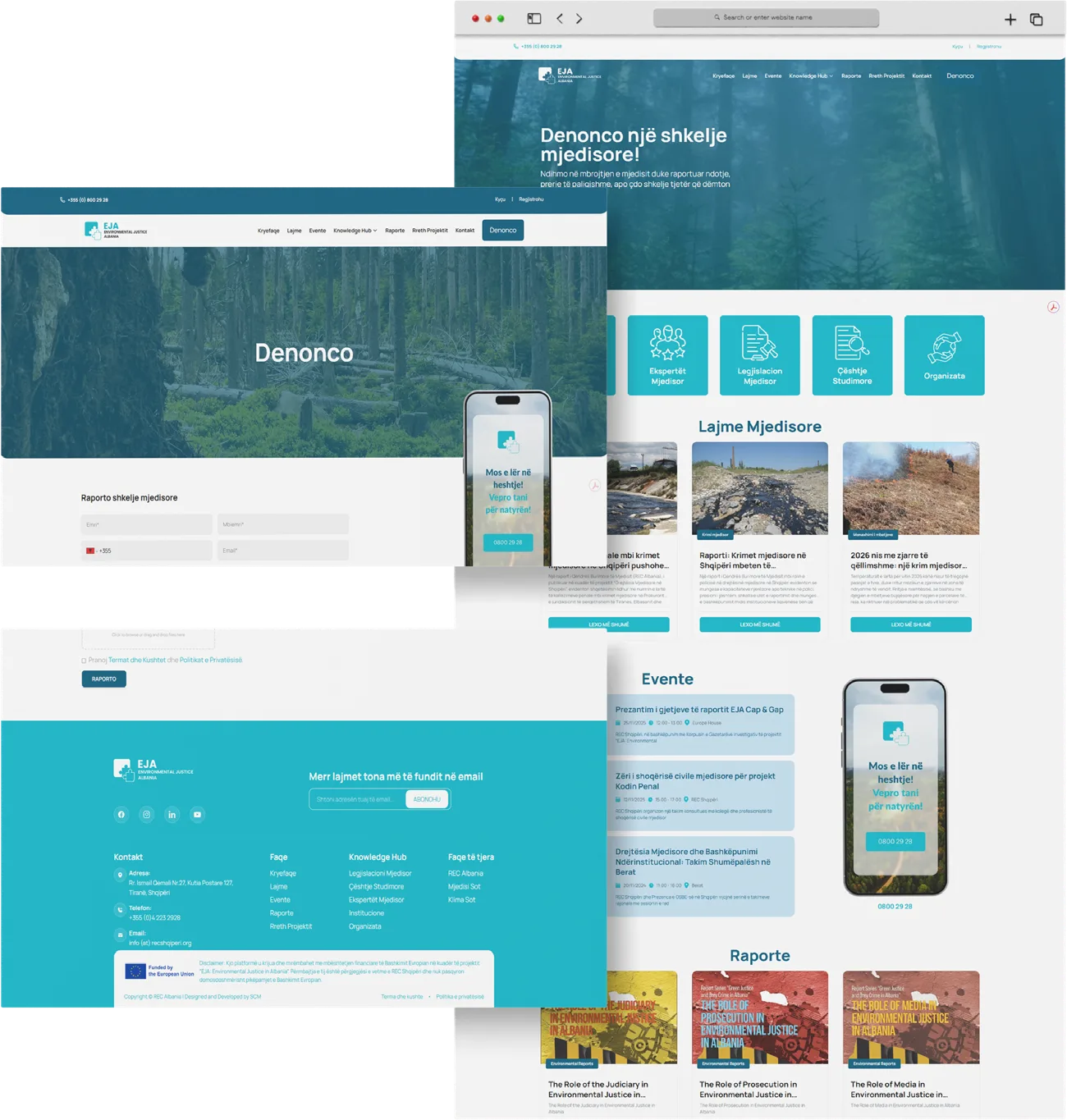
- citizen reporting through the “Denonco” accountability intake workflow
- an institutional admin dashboard for governance and multi-entity management
- a scalable platform architecture aligned with long-term transparency and accountability use cases
- Project
- EJA Platform (ejaplatform.al) – Environmental Justice Albania
- Platform type
- Public transparency and accountability platform with administrative governance backend
- Geographic scope
- Albania (national environmental justice ecosystem)
- Service type
- Data transparency platform development, information architecture, administrative backend engineering, public accountability modules, UX/UI design
- Role of Spontan
- Lead digital partner for platform architecture, UX/UI, admin backend, public-facing modules, and structured accountability workflows
- Sector focus
- Environmental justice, institutional transparency, public accountability, rule-of-law monitoring, citizen engagement
- Architecture type
- Multi-module public platform + structured admin dashboard for content and data governance
- Core components
- Admin dashboard, environmental news, legislation database, organizations directory, experts directory, case monitoring module, institutions directory, activities module, “Denonco” reporting mechanism, reports module
- Accountability mechanism
- “Denonco” citizen reporting form with structured incident intake and evidence submission
- Strategic donor/governance value
- Supports anti-corruption, good governance, rule-of-law monitoring, and verifiable public engagement through structured, searchable information systems
- Delivery discipline
- ISO 9001 and ISO/IEC 27001-aligned operational workflows (quality consistency, review governance, structured asset control, reliable multi-module delivery)
Building a Public Accountability Platform That Is More Than a Website
The EJA Platform required a system capable of doing far more than publishing news or static project pages. It needed to function as a structured digital infrastructure for transparency and accountability in the environmental justice ecosystem.
The core challenge was to bring multiple information layers into one coherent system, including:
- environmental legislation
- institutional directories
- civil society organizations
- environmental experts
- documented cases
- public activities
- analytical reports
- citizen reporting of environmental violations
This created a dual requirement:
- 01
Public-side transparency and access
The platform had to provide fast, searchable, structured access to diverse environmental justice information for citizens, civil society organizations, researchers, journalists, and institutions.
- 02
Administrative-side governance and maintainability
The system had to include a robust backend capable of managing multiple data entities, content streams, and accountability modules in a disciplined and scalable way.
In practical terms, the challenge was to build a hybrid transparency architecture that combines:
- open public information access
- accountability-oriented reporting workflows
- operational governance tools for platform administrators
This is what turns a platform into a transparency and accountability infrastructure, rather than a standard institutional site.
Spontan solved a delivery problem that is common in governance and donor-funded transparency projects and often underestimated:
How do you build a public-interest platform that remains searchable, governable, and usable across multiple legal, institutional, and case-related information domains while also supporting active accountability participation?
Our role extended beyond front-end design and module development. We closed the gap between transparency publishing and functional accountability architecture.
- 01
We structured information architecture for accountability (not just content display)
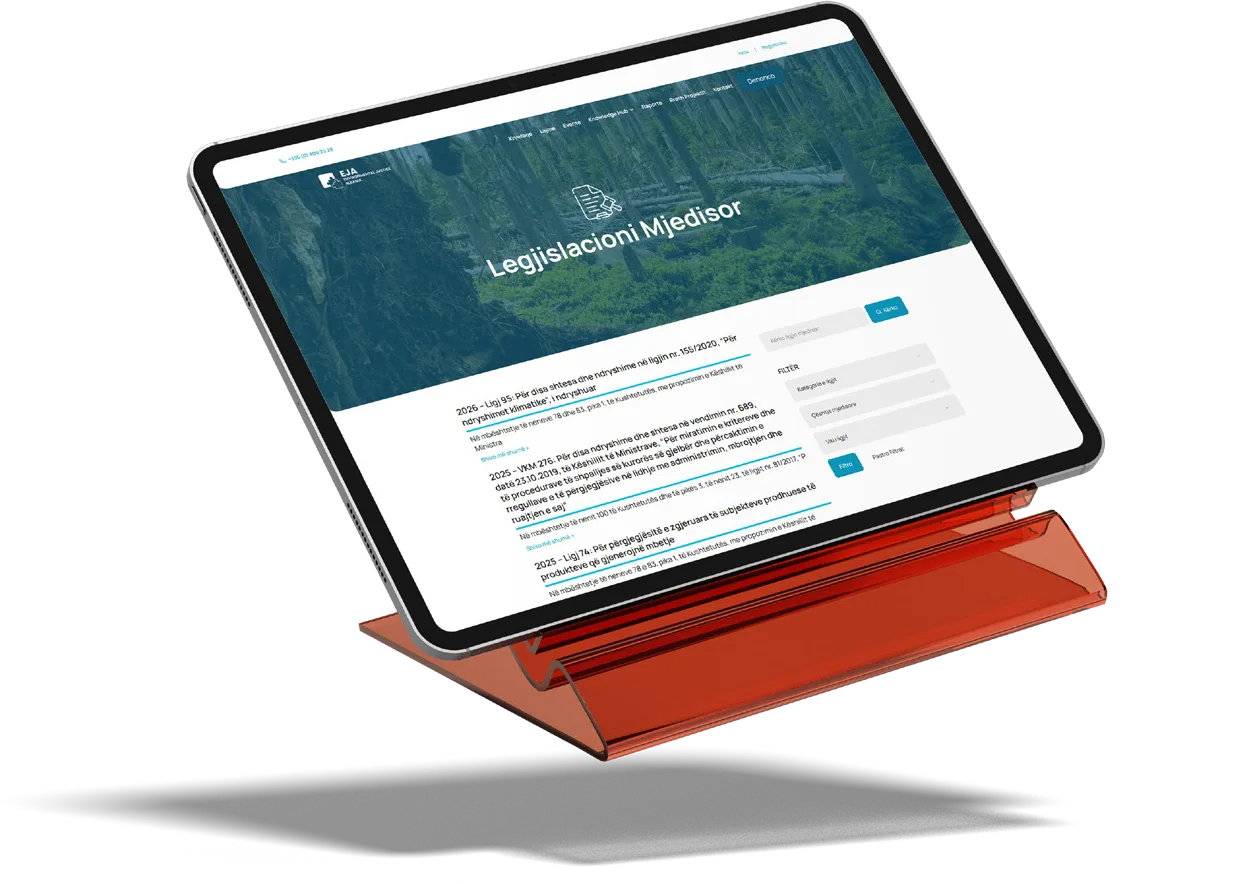
Spontan designed the platform to organize multiple transparency-critical information domains into searchable and filterable modules, including:
- legislation
- institutions
- organizations
- experts
- cases
- reports
- activities
This transformed fragmented information into a structured public oversight environment and demonstrated capability in information architecture for accountability, not only content page design.
- 02
We built a hybrid system (public transparency + administrative governance)
The platform combines public-facing transparency modules with a structured administrative backend and multi-entity content management environment.
This proves capacity to deliver both:
- citizen-facing access and discoverability
- institutional data governance and operational administration
That hybrid delivery model is a key differentiator in donor-relevant transparency platforms.
- 03
We implemented an accountability-oriented citizen reporting workflow (“Denonco”)
Spontan developed the “Denonco” module as a structured digital intake mechanism for reporting suspected environmental violations.
The workflow supports:
- violation typology identification
- event description and localization
- evidence upload (photo/video)
- date-of-incident recording
- structured submission fields for follow-up use and analysis
This extends the platform from passive transparency publishing into active accountability participation.
- 04
We connected legal, institutional, and case modules into a rule-of-law monitoring logic
By combining legal databases, institutional directories, case documentation, and reports, the platform supports a more monitorable view of environmental justice enforcement and institutional response.
This directly aligns with governance and donor priorities related to:
- rule of law
- implementation monitoring
- institutional accountability
- anti-corruption and non-enforcement risk visibility
- 05
We built dashboard-oriented oversight logic for platform governance
Spontan implemented an administrative environment with dashboard-style oversight elements (including summary views, trend logic, and category distribution visibility), creating a foundation for:
- operational monitoring
- structured platform administration
- expanded transparency dashboard use cases over time
- 06
We delivered with quality and information governance discipline
Because EJA handles structured public information and accountability-related reporting workflows, delivery reliability and governance discipline were essential.
Spontan applied documented internal workflows aligned with ISO 9001 and ISO/IEC 27001 operational practices to support:
- implementation consistency
- structured review and approval practices
- version and asset control
- disciplined multi-module deployment
- maintainable platform logic and governance readiness
Spontan’s core value in this project was the ability to connect six elements in one delivery model:
- information architecture for accountability
- public transparency modules
- citizen reporting workflows
- administrative dashboard governance
- multi-module platform engineering
- quality and information governance discipline
That combination is what made the EJA Platform more than a visibility website and positioned it as a data transparency and accountability infrastructure.
The live platform3
Data Transparency Platform Development and Accountability Modules
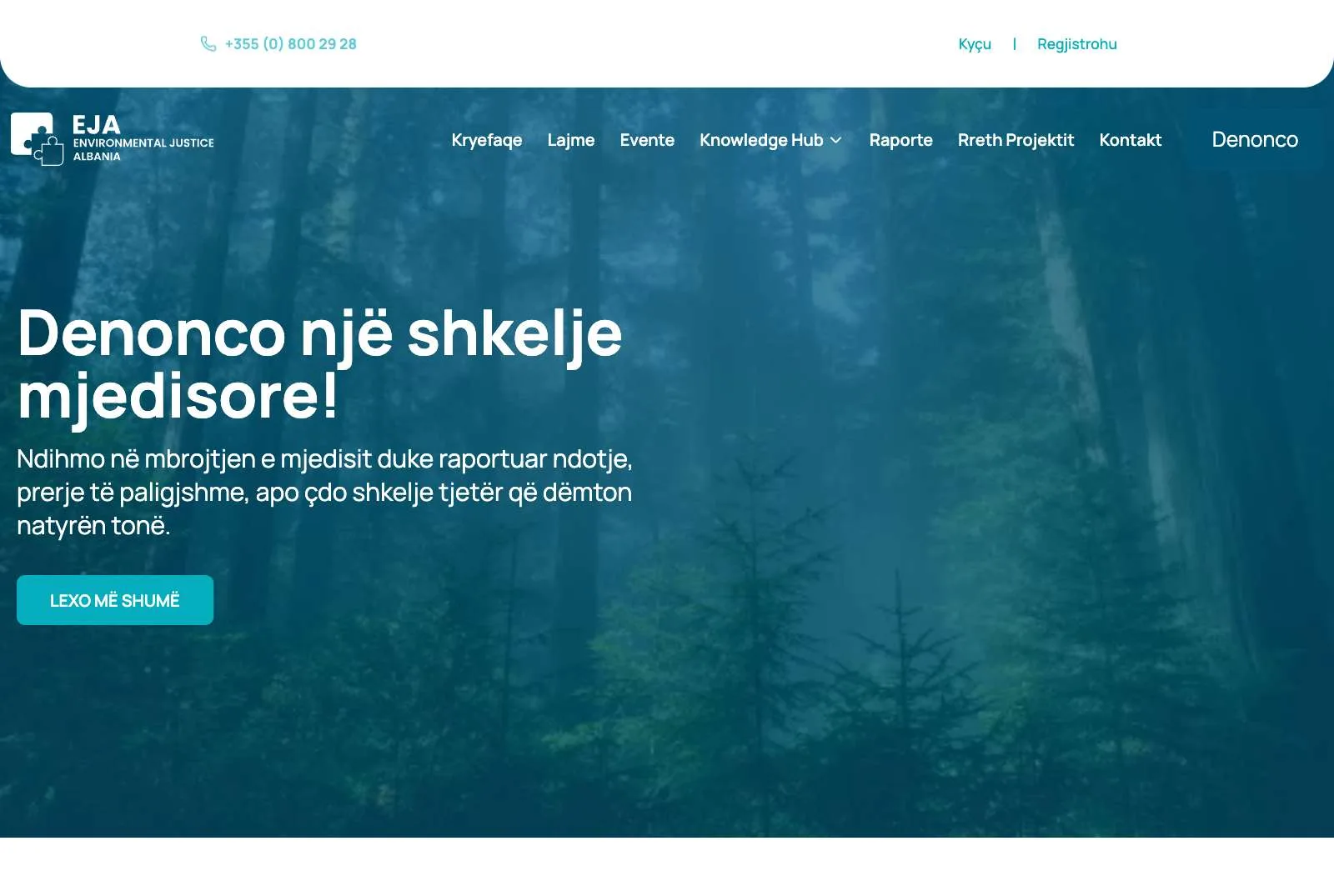
Spontan developed the EJA Platform as a multi-module system designed for public transparency, institutional usability, and structured environmental justice monitoring.
Included scope
- platform UX/UI design and information architecture
- administrative backend and multi-entity content management system
- dashboard interface for operational oversight
- environmental news management module
- environmental legislation database and filtering workflows
- organizations directory module (searchable / dynamic listing)
- environmental experts directory module with advanced filters
- case studies / environmental violation monitoring module
- institutions transparency directory
- activities and public engagement module
- “Denonco” citizen reporting form and structured incident intake workflow
- reports publication module for analytical and thematic outputs
This scope demonstrates a multi-stream transparency platform build, not a single-feature website deployment.
Building a Transparency Platform as an Accountability System
To deliver EJA effectively, Spontan approached the platform as a data transparency and accountability architecture, not a standard content website.
- 01
Information architecture and module taxonomy design
The first priority was structuring the platform into clear, functional modules aligned with environmental justice monitoring and public accountability needs.
This required defining:
- entity types (institutions, experts, organizations, legislation, cases, reports, activities)
- search and filter logic
- public navigation pathways
- relationships between information domains
This is the foundation of a platform that supports structured public oversight.
- 02
Administrative backend engineering for multi-entity governance
Spontan developed a multi-layered admin environment to support content and database governance across many platform sections.
The backend architecture enables management of:
- records and listings
- publications and news
- legislation entries
- event/activity updates
- user and administrative operations
This backend layer is critical for maintainability, consistency, and long-term platform operation.
- 03
Public transparency module development (searchable, indexed access)
Public-facing modules were designed to prioritize fast access, clarity, and verifiability through:
- search bars
- filters
- categorized content structures
- dynamic listings (“load more” behavior)
- standardized profile/list entry layouts
This improves transparency by making information practically usable, not merely available.
- 04
Accountability workflow design (citizen reporting / “Denonco”)
The “Denonco” module was implemented as a structured digital reporting workflow to support citizen participation in environmental accountability.
Its logic includes:
- violation typology identification
- event description and localization
- evidence upload (photo/video)
- incident date recording
- structured submission fields for follow-up and analysis
This module extends the platform from transparency publishing into active accountability participation.
- 05
Data visibility, monitoring, and dashboard logic
The platform includes administrative dashboard features that provide overview logic through:
- statistics cards
- trend visualization
- category distribution charts
This supports platform operators in monitoring activity and data structure across modules and serves as a strong architectural base for expanded transparency dashboard use cases.
- 06
Quality-controlled delivery and information governance discipline (ISO 9001 / ISO/IEC 27001)
Because EJA handles structured public information and accountability-related reporting workflows, delivery reliability and governance discipline were essential.
Spontan applied documented internal workflows aligned with ISO 9001 and ISO/IEC 27001 operational standards to support:
- implementation consistency
- structured review and approval practices
- version/asset control
- disciplined multi-module deployment
- maintainable platform logic and governance readiness
This strengthens the platform’s relevance for donor-compliant and institution-facing digital environments.
Administrative dashboard (operational oversight layer)
The platform includes an admin dashboard that centralizes operational visibility across multiple data entities and content modules. It provides a monitoring-oriented overview through:
- key module counts
- trend views
- category distribution visualization
- access to multi-entity administration workflows
This demonstrates Spontan’s capability to build dashboard-oriented oversight interfaces that support operational governance in transparency systems.
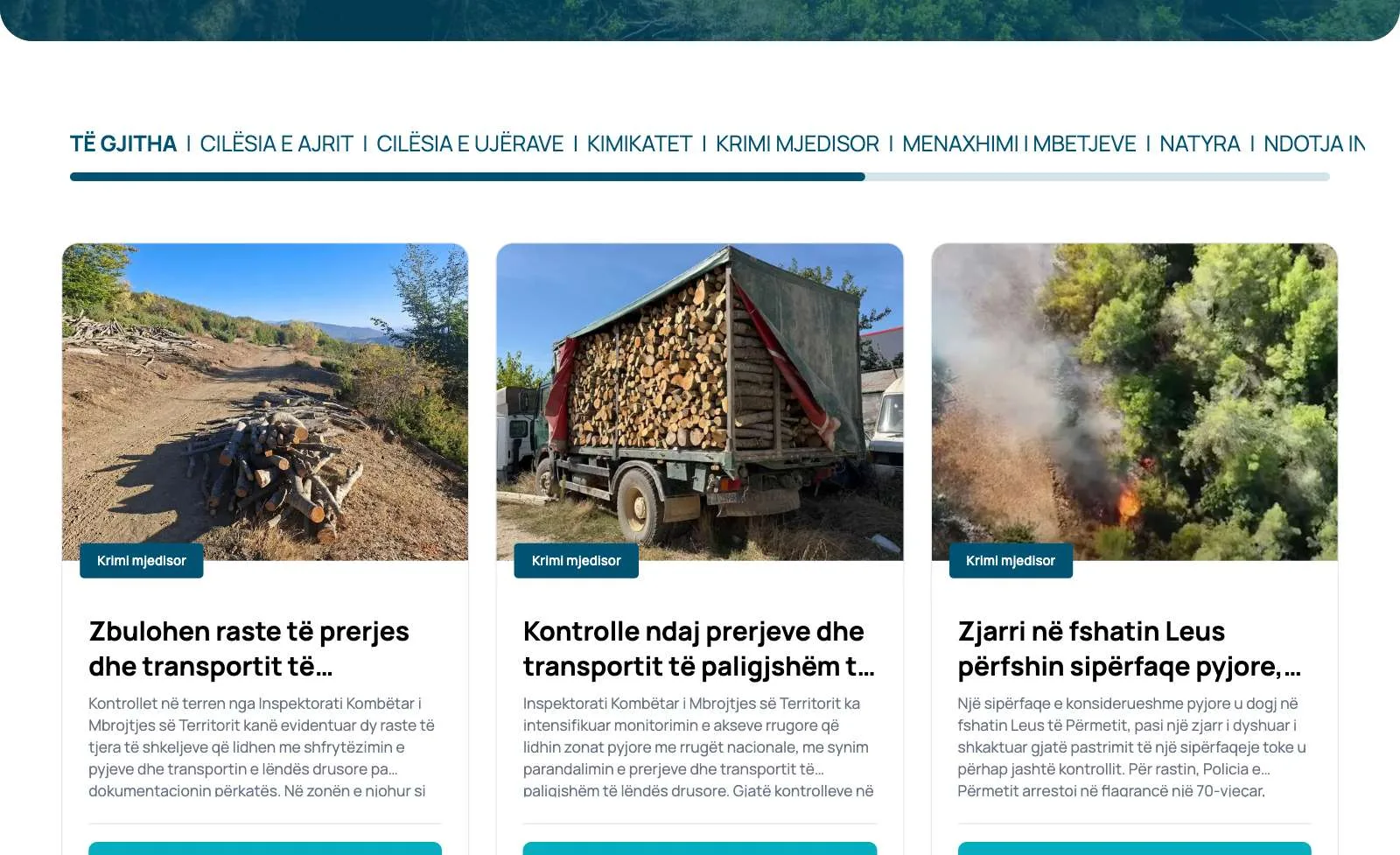
Environmental news module
The platform includes an environmental news section with category-based administration and publication workflows. This supports ongoing public information and issue-based updates within the broader environmental justice ecosystem.
Strategic value:
- public awareness continuity
- issue visibility
- searchable content accumulation over time
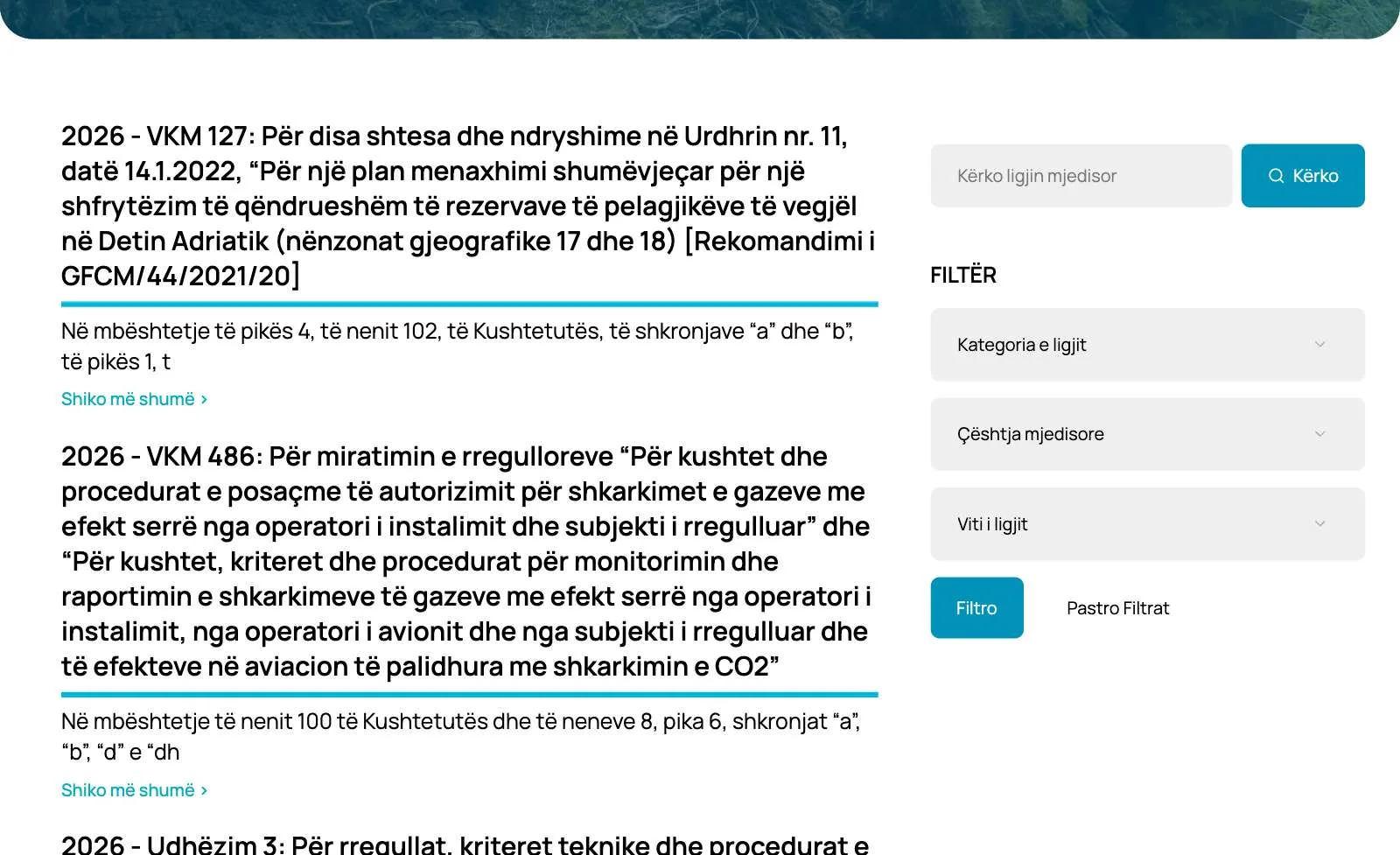
Environmental legislation database (public + admin)
The Environmental Legislation section functions as a structured and updated database of legal and sub-legal acts, including laws, decisions of the Council of Ministers, and other regulatory acts.
Key platform capabilities:
- search and filtering by category
- filtering by environmental issue
- filtering by year of adoption
- organized public access to legal framework records
Strategic value:
- transparency in legal information access
- support for policy monitoring
- improved legal discoverability
- alignment with rule-of-law and EU harmonization narratives
Organizations directory (transparency and inter-institutional cooperation)
The Organizations section presents a structured database of civil society organizations and relevant institutions with searchable access and contact-level transparency.
Capabilities include:
- search engine for organization discovery
- physical address and location information
- email and phone contact fields
- direct links to official websites
- dynamic listing with “Load more”
- intuitive layout for fast access
Strategic value:
- facilitates inter-institutional cooperation
- improves visibility of civil society actors
- supports donor ecosystem mapping and stakeholder discovery
Environmental experts directory (indexed sectoral expertise)
The Environmental Experts section is a structured database of professionals and researchers in the environmental field with indexed search and advanced filtering.
Capabilities include:
- search by expert name
- filter by expertise category
- filter by affiliated institution
- classification by expert typology
- individual profile pages (“See more”)
- dynamic listing with “Load more”
Strategic value:
- structured access to sectoral expertise
- improved discoverability for institutions and CSOs
- supports evidence-based collaboration and consultation processes
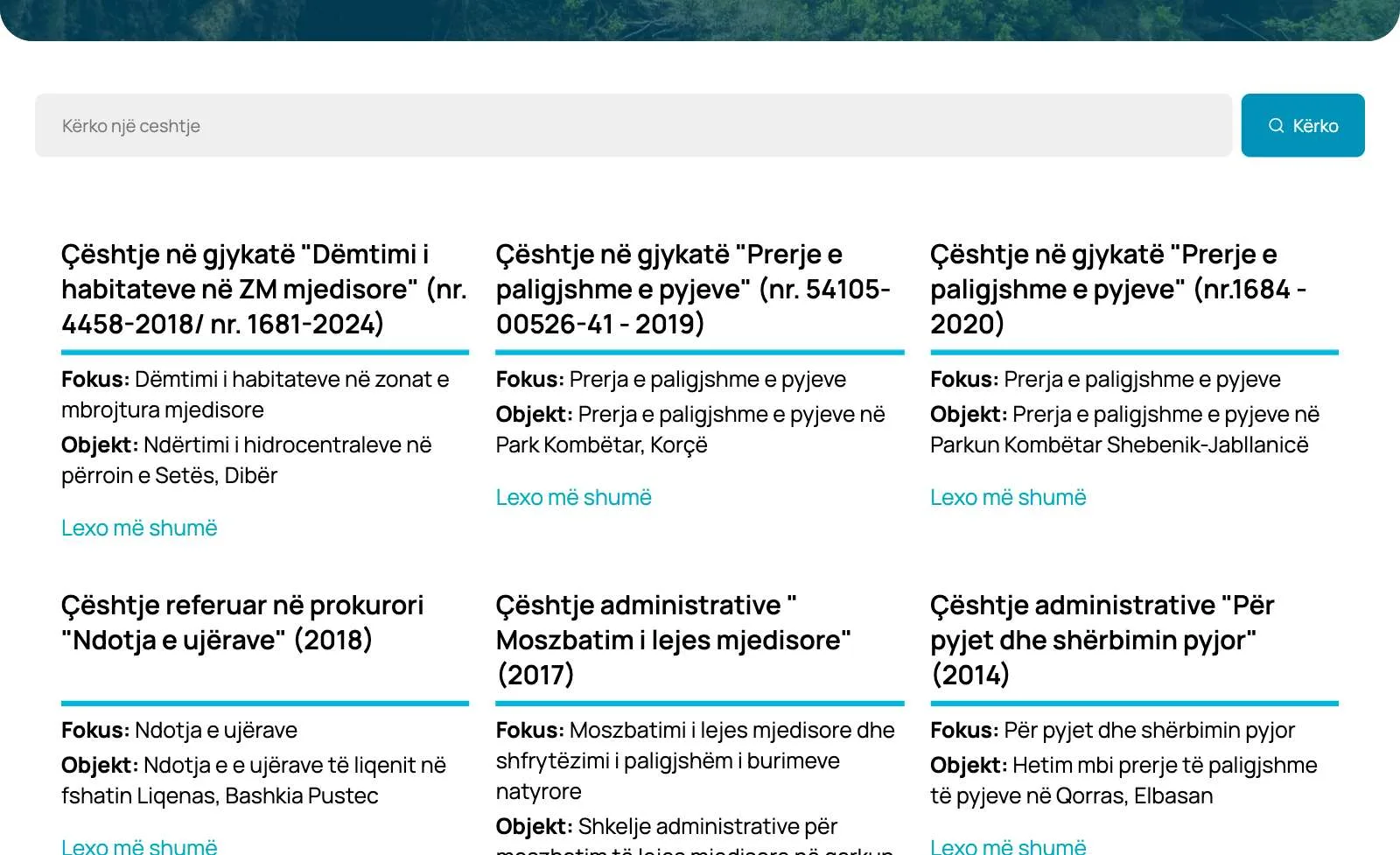
Case studies / environmental violations monitoring module
The Case Studies section operates as a structured documentation and monitoring module for environmental violations at administrative, prosecutorial, and judicial levels.
It is organized through:
- thematic focus
- subject matter of the case
- procedural / institutional treatment logic
- systematic archiving and publication
Strategic value:
- public accountability mechanism for environmental justice implementation
- monitoring of institutional response to violations
- support for citizen oversight and rule-of-law visibility
- structured evidence base for environmental governance analysis
Institutions directory (institutional transparency and accountability)
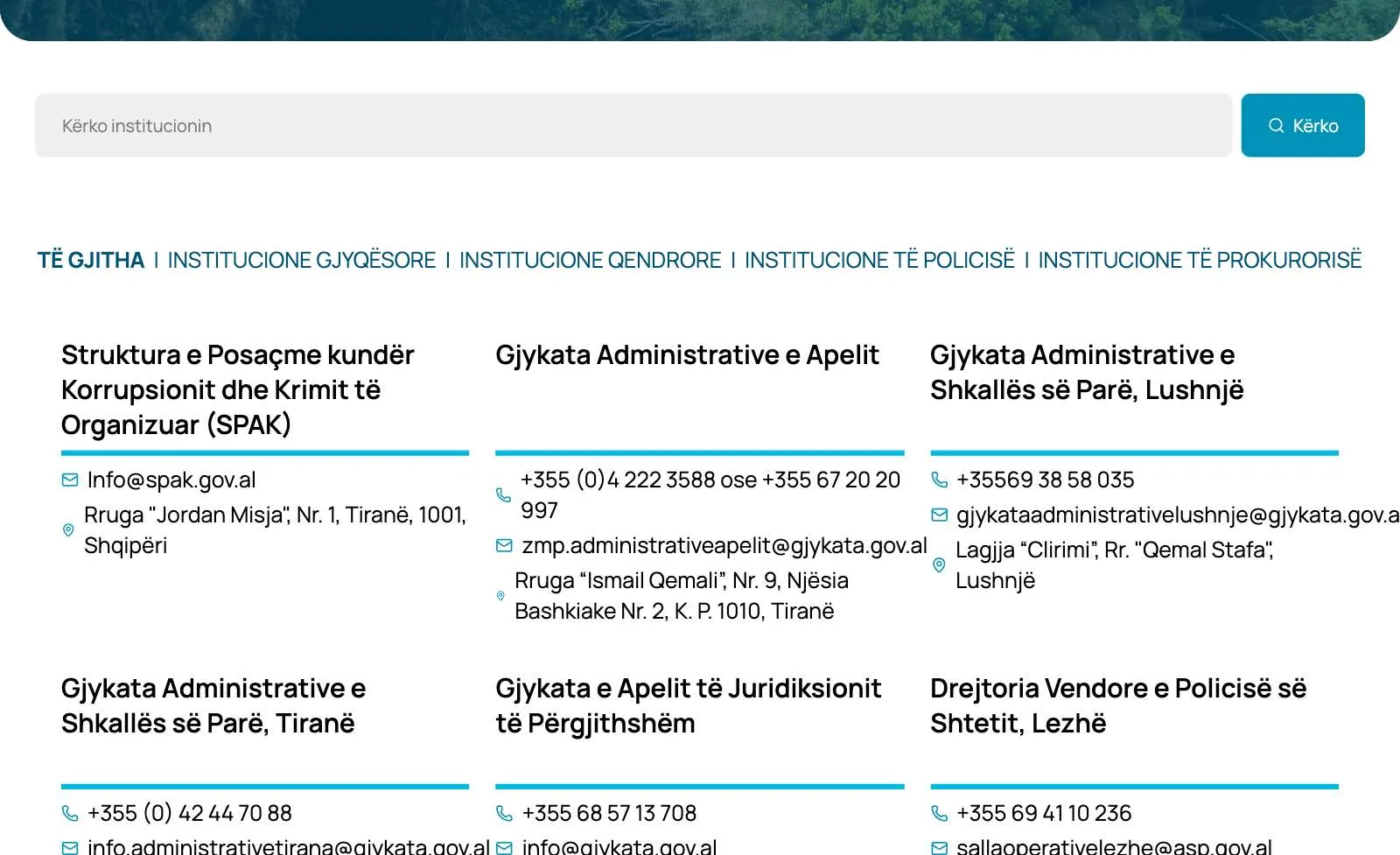
The Institutions section is a structured directory of key institutions in justice, prosecution, police, and public administration, organized by functional and jurisdictional categories.
Capabilities include:
- search and filtering by institutional typology
- categorized access (judicial, central, police, prosecution, etc.)
- full contact and address information
- structured listings for referral and tracking clarity
Strategic value:
- facilitates access to responsible institutions
- supports referral and case tracking mechanisms
- improves accountability in treatment of environmental issues
- strengthens institutional transparency and integrity mapping
Activities module (public engagement and verifiable process transparency)
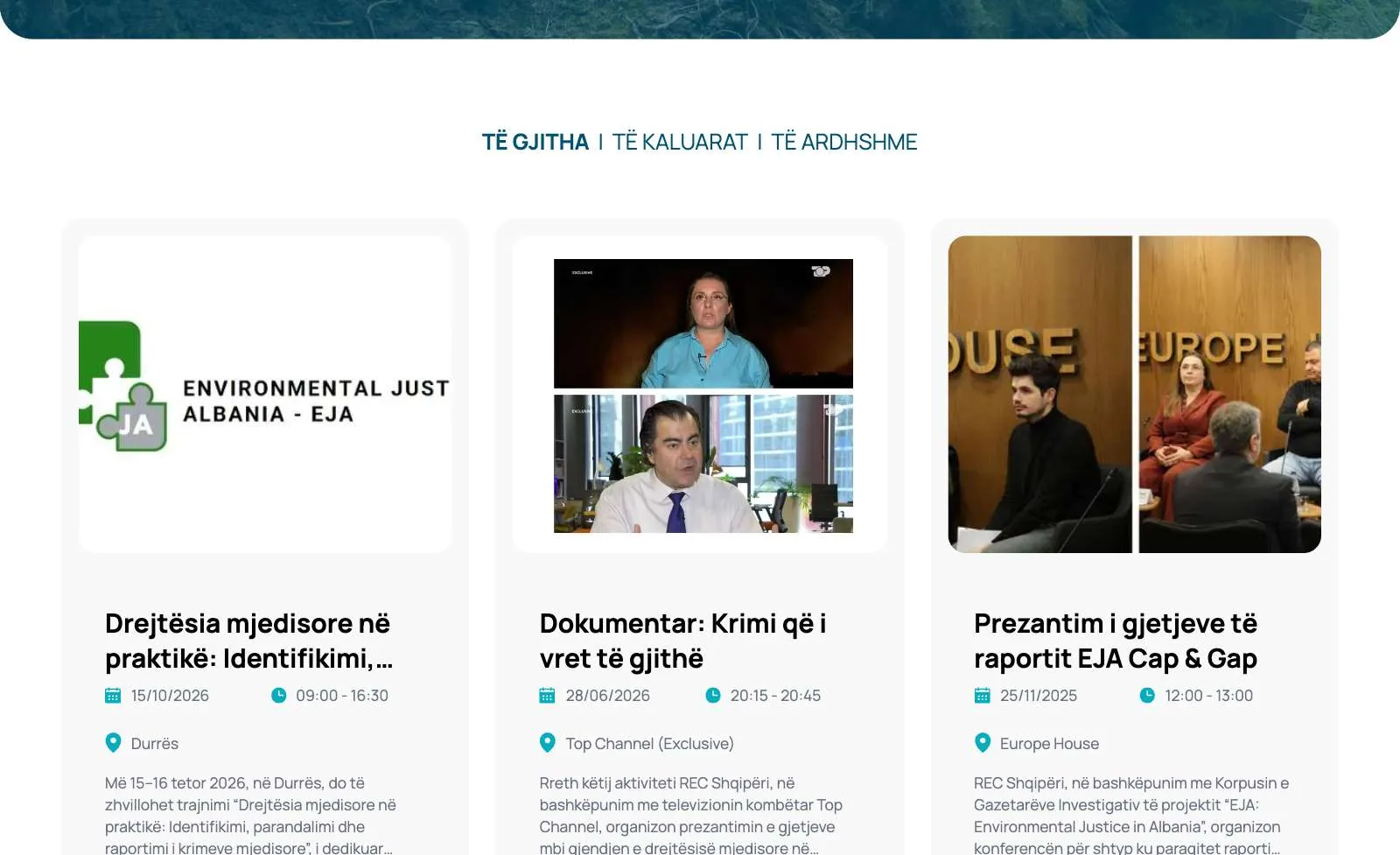
The Activities section documents conferences, trainings, consultative meetings, and forums related to environmental justice and rule-of-law strengthening.
Capabilities include:
- distinction between past and future activities
- publication of topic, place, date/time, and event information
- dynamic listing and event pages
Strategic value:
- transparency for donor-funded public engagements
- documentation of inter-institutional dialogue
- verifiability of capacity-building and monitoring activities
- stronger public trust in program implementation processes
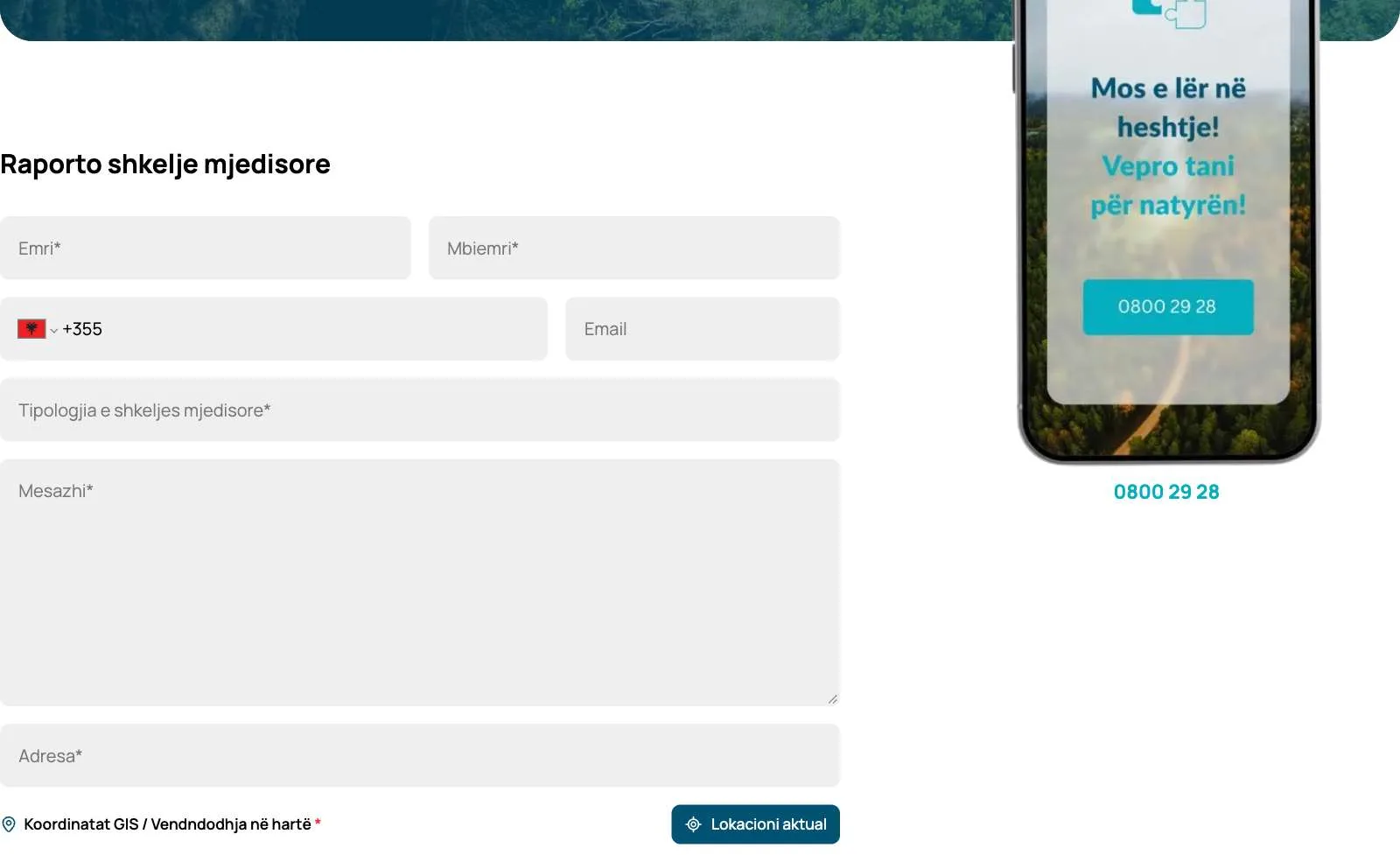
“Denonco” citizen reporting mechanism (environmental accountability intake)
The “Denonco” section is a digital reporting mechanism for direct citizen reporting of suspected environmental violations.
Structured form capabilities include:
- typology of violation
- event description
- location / address
- evidence upload (photo/video)
- date of finding
- user identification/contact fields
- structured submission logic for follow-up use
Strategic value:
- strengthens active community participation
- increases transparency in reporting environmental violations
- creates a structured database for institutional analysis and follow-up
- supports anti-corruption and non-enforcement monitoring through documented citizen input
Reports module (analytical accountability layer)
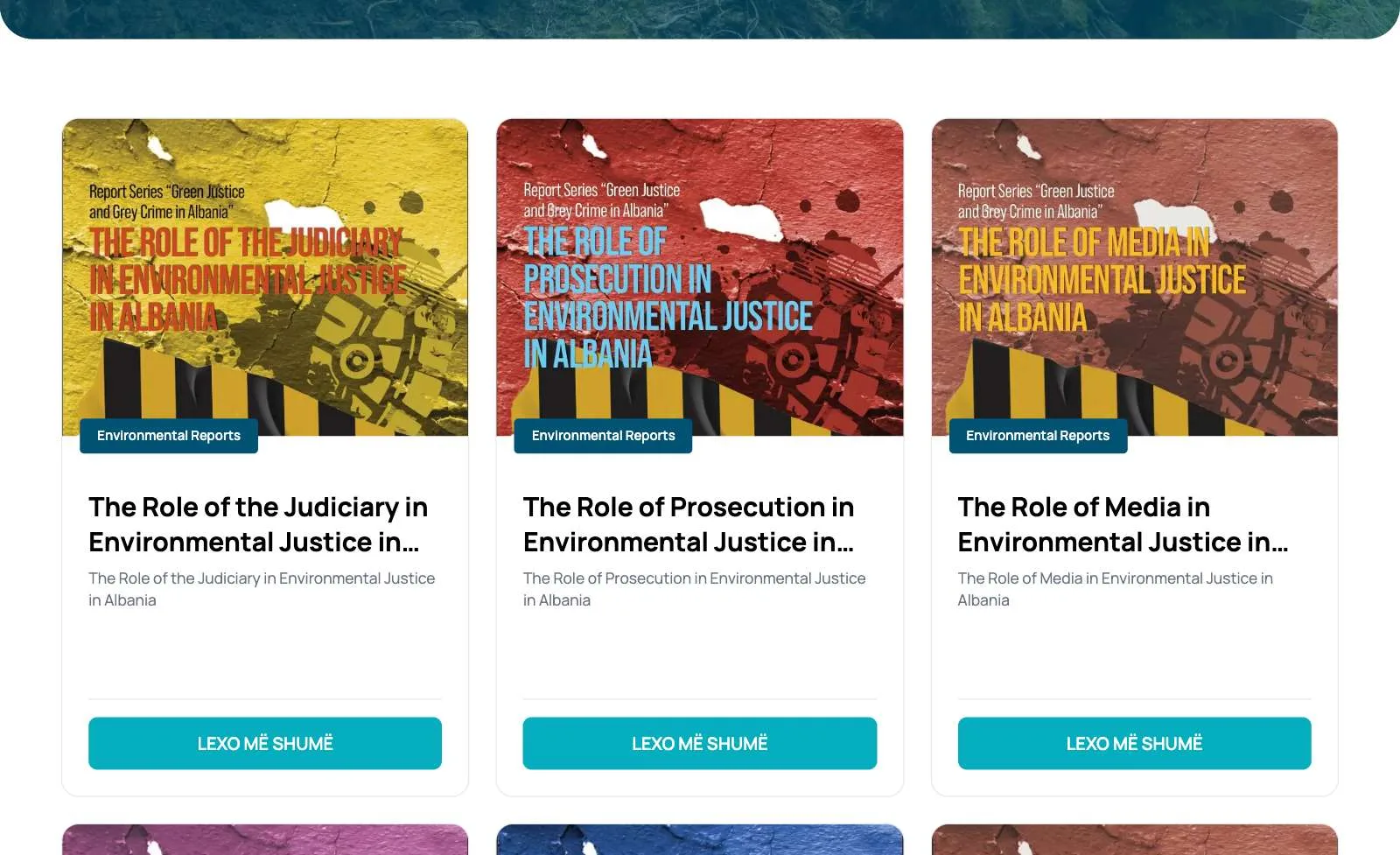
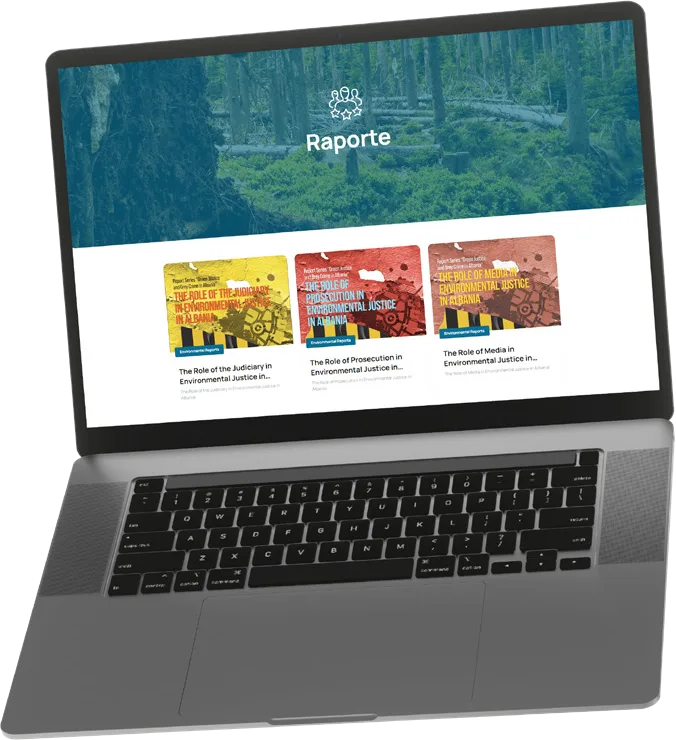
The Reports section publishes in-depth analyses on the functioning of institutions in the environmental justice system, including courts, prosecution, and police.
This module supports:
- institutional performance monitoring
- effectiveness assessment of criminal/administrative prosecution
- identification of implementation gaps
- evidence-based recommendations for reform
- publication of thematic reports and integrated summaries
Strategic value:
- transforms the platform into an analytical transparency tool
- strengthens evidence-based environmental governance
- supports policy reform and institutional accountability dialogue
A platform like EJA creates long-term value only if it remains governable, maintainable, and expandable beyond launch.
Continuity value built into the platform
The EJA Platform architecture supports:
- modular expansion of content and data domains
- structured administration across multiple transparency modules
- searchable/indexed records for long-term usability
- repeatable publishing workflows across public accountability sections
- operational visibility via dashboard-style admin oversight
Why this matters for donor-funded accountability systems
Donor and governance-focused platforms often fail when information becomes fragmented, outdated, or difficult to manage. EJA’s modular and indexed structure helps reduce those risks by supporting:
- consistency
- maintainability
- transparency continuity
- institutional usability
- data-backed monitoring workflows
ISO-backed delivery discipline (quality + information / asset governance)
Spontan’s ISO 9001 and ISO/IEC 27001-certified operating discipline strengthens this type of platform delivery by improving:
- process consistency
- review governance
- asset and version control
- multi-module implementation reliability
- structured platform governance readiness
This is especially relevant for transparency and accountability platforms that must remain credible, organized, and auditable over time.
The EJA Platform demonstrates Spontan’s capacity to build data transparency and accountability infrastructure that combines public information access, institutional monitoring logic, and citizen reporting workflows in one coherent system.
- 01
Information architecture for accountability
Multiple legal, institutional, expert, organizational, case, and reporting datasets structured into searchable transparency modules.
- 02
Public accountability mechanisms
Citizen reporting (“Denonco”), case tracking, institutional directories, and reports support rule-of-law monitoring and public oversight.
- 03
Dashboard-oriented operational governance
Admin dashboard and monitoring views provide a strong base for transparency dashboards and internal oversight workflows.
- 04
Hybrid transparency system
Public-facing access and administrative governance backend delivered in one platform architecture.
- 05
Donor-relevant governance value
Strong alignment with anti-corruption, good governance, rule-of-law monitoring, and accountability priorities typical of EU/World Bank-style programs.
- 06
Quality- and security-oriented delivery discipline
ISO 9001 and ISO/IEC 27001-aligned workflows reinforced implementation control, structured deployment, and multi-module governance reliability.
By combining transparency databases, accountability workflows, public access modules, and admin oversight architecture, Spontan delivered a platform that functions as an environmental justice information system and a practical accountability infrastructure.
The following delivery elements were included in the project scope:
- 1 multi-module national transparency platform
- 1 administrative dashboard and multi-entity content management backend
- environmental news module
- environmental legislation database with search/filter logic
- organizations directory (searchable / dynamic listing)
- environmental experts directory with advanced filters
- case studies / environmental violations monitoring module
- institutions transparency directory
- activities and public engagement module
- “Denonco” citizen reporting mechanism with structured incident intake and evidence upload
- reports and analytical publications module
What is a data transparency and accountability platform?
A data transparency and accountability platform is a digital system that organizes public-interest information (such as laws, institutions, cases, reports, and activities) into searchable, structured modules, often combined with reporting or monitoring workflows.
How does a transparency dashboard support donor-funded governance programs?
Transparency dashboards help institutions and projects monitor data categories, trends, activities, and performance indicators, improving visibility, oversight, and verifiability for donors and the public.
What is “information architecture for accountability”?
It is the structured design of data, categories, search, filters, and user navigation so that complex public-interest information becomes accessible, monitorable, and usable for accountability purposes.
Why is citizen reporting important in environmental accountability platforms?
Citizen reporting creates a direct intake mechanism for suspected violations, supports community participation, and helps build structured evidence for institutional follow-up and rule-of-law monitoring.
Can Spontan deliver similar transparency and accountability platforms for donor-funded programs?
Yes. This case study demonstrates Spontan’s ability to combine information architecture, accountability workflows, admin governance logic, and multi-module platform engineering into durable transparency systems for governance-focused environments.
The EJA Platform demonstrates Spontan Agency’s ability to deliver high-value data transparency and accountability infrastructure where success depends on far more than front-end execution.
In this assignment, Spontan helped transform complex environmental justice information and accountability needs into a structured, searchable, and governance-ready digital platform that combines public transparency, institutional monitoring logic, and citizen participation workflows.
Our contribution combined:
- information architecture for accountability
- multi-module public transparency platform engineering
- structured legal, institutional, and case-related database modules
- citizen reporting workflow design (“Denonco”)
- administrative dashboard and governance backend logic
- scalable data governance and operational continuity architecture
- quality- and information-governance-disciplined delivery practices (ISO 9001 / ISO/IEC 27001-aligned)
The result is a platform designed not only to publish information, but to remain usable, monitorable, and accountability-ready over time.
This case reflects the level of execution required for governance, rule-of-law, environmental justice, and donor-funded transparency initiatives where public trust, structured oversight, and long-term system usability are as important as the build itself.